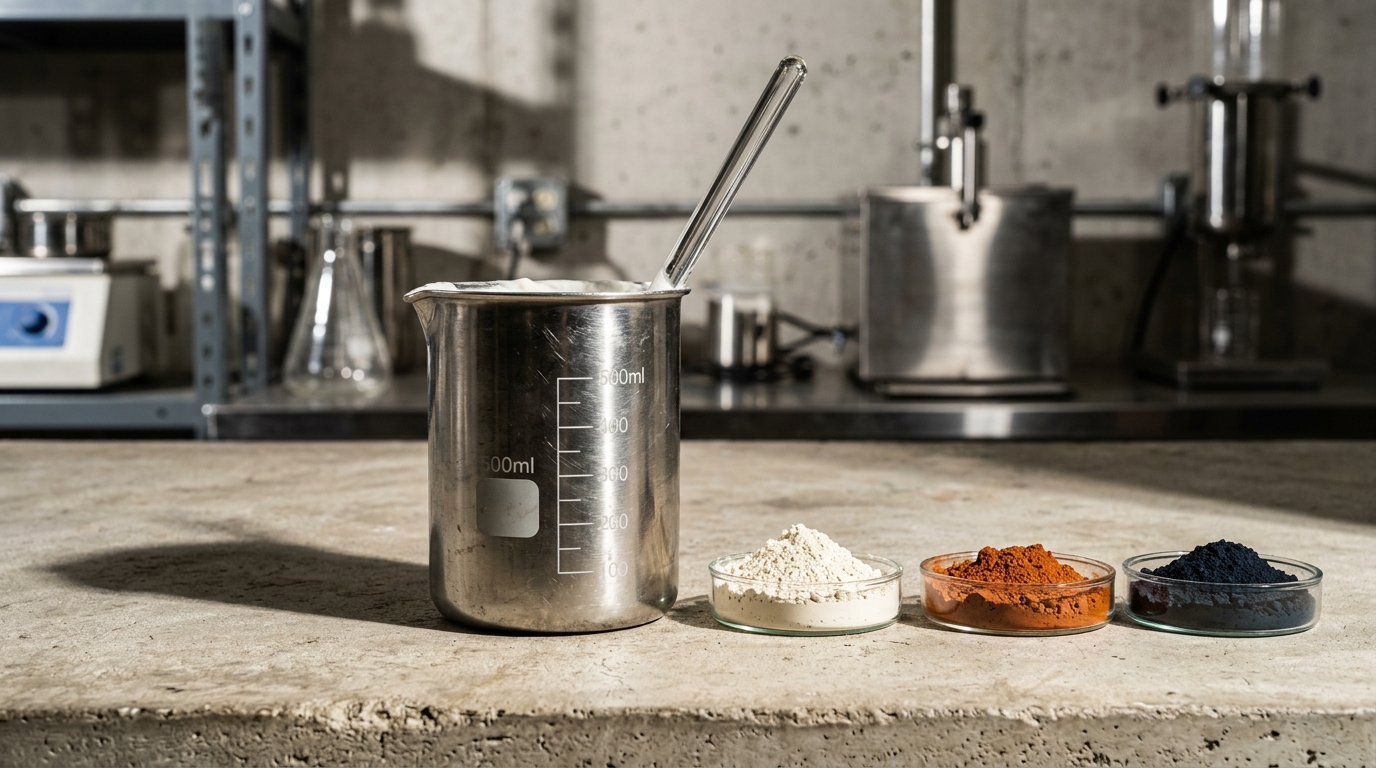
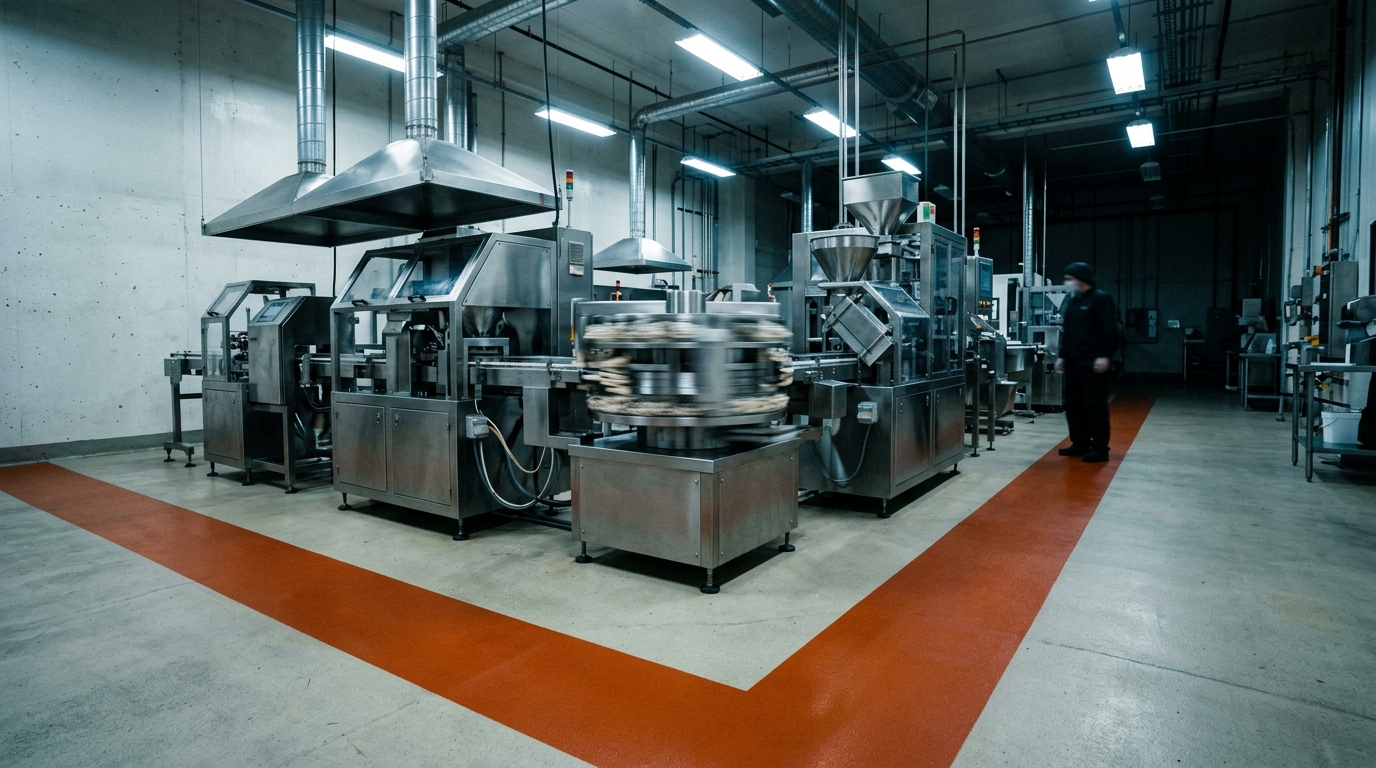
[01 / WHAT IT IS]
Private label, white label, contract manufacturing — the words people get wrong.
The category is full of bad definitions, mostly because the same factory will sell you a different thing depending on which word you used in your inquiry. Here is how an operator should hold the lines:
White label is a finished, generic product the manufacturer already produces — your name goes on the label, but the formula, packaging, and often the SKU code are shared with everyone else who white-labels that exact product. Lead times are short. MOQs are low. Differentiation is zero. White label is a stepping stone, not a moat.
Private label is the same factory making a product specifically configured for your brand — your bottle, your closure, your label artwork printed on your stock, your serial number, and (often) your formula tweak. The bulk may still come from a shared base formula, but the finished SKU is yours. Lead times stretch. MOQs go up. Margins improve.
Contract manufacturing (sometimes "CMO" or "CDMO" in pharma-adjacent language) is the deepest version of the relationship: you arrive with a formula, a stability protocol, and a brief, and the factory builds it for you under your IP. They are a service provider on your spec sheet. This is how mature brands move once the SKU starts to matter.
OEM is the term you will see on Alibaba and in offshore inquiries. It maps loosely onto contract manufacturing in the West, but the IP posture is different — OEM factories often retain rights to the formula they develop for you and may resell it to a competitor six months later. Read the development agreement, every time, before you write a development check.
[02 / WHO NEEDS IT]
Five operator profiles that route through the same sourcing playbook.
Most of the inbound we see falls into one of five buckets, and the first call is mostly about figuring out which bucket the founder is in — because the right factory, the right MOQ, and the right format are different for each.
- DTC founders — building a Shopify-first brand, running paid social, and need a SKU that survives a pallet test in a 3PL. The bottleneck is usually packaging, not formula.
- Amazon sellers — coming off a private-label arbitrage flip and wanting to vertical-integrate. The bottleneck is usually testing documentation and FNSKU compliance, not bulk.
- Independent retailers — chiropractor offices, gyms, salons, vet clinics — who want a house line for their existing customer base. They tolerate higher per-unit costs because they have no CAC.
- Indie beauty operators — founder-led skincare and color brands. The bottleneck is almost always packaging-design fidelity through the production print run.
- Supplement and functional-beverage brands — the largest category by volume, where the operator's edge is formulation IP and certification posture, not the factory itself.
[03 / DECISION TREE]
Private label vs. white label vs. build in-house.
The honest version of this decision tree fits in five lines. Most founders make it harder than it needs to be:
- If you are testing demand and have not run a single ad — white label. Cheap, fast, throwaway. Validate before you spec.
- If you have proven the offer and need defensibility against a copycat — private label with a stock formula and your packaging IP. The packaging is doing the differentiation work.
- If your offer rests on a hero ingredient — private label with a custom dose, stability tested. Spend the money on the COA, not the bottle.
- If your customer asks "what's in it" before they buy — contract manufacturing with your formula on file. The formula is the brand.
- If you are doing eight figures and your factory's other clients are starting to look like you — build in-house or buy the line. The math finally works.
[04 / MISTAKES]
Five mistakes we keep watching founders make.
These are not edge cases. These are the failure modes that show up, in some order, on roughly half the inquiries we see.
-
Mistake 01
Quoting bulk and assuming finished cost. Bulk powder at $14/kg becomes a $7.40 finished bottle once you stack the bottle, closure, induction seal, label, carton, fulfillment-ready case pack, and minimum-run print fees. Always quote finished, landed, with components included.
-
Mistake 02
Treating GMP as a binary. A facility can be cGMP-compliant under 21 CFR 111 [02], certified by NSF [04], certified by NPA [05], or audited by a customer-paid third party. They are not interchangeable. Ask which certificate, who issued it, and when it was last renewed.
-
Mistake 03
Skipping stability testing on a custom formula. A formula that looks good at week 4 can separate, oxidize, or lose label-claim potency by month 18 on a retail shelf. Stability is not optional — it is the only document that protects you when a customer's lab tests come back low.
-
Mistake 04
Letting the factory write the label. Structure-function claims, allergen statements, supplement facts panels, and Prop 65 warnings are the brand's responsibility under DSHEA [01]. The factory will print whatever you approve. Approve carefully. Get a regulatory consultant to bless the label before the print plate is cut.
-
Mistake 05
Negotiating the per-unit price and ignoring the reorder terms. First-run pricing is the easy part. The number that decides whether you have a business is the second-PO price after you have committed to the format and your CAC has scaled. Lock the reorder schedule, the price-step volume tiers, and the lead-time SLA in the same agreement that covers the first run.
[05 / COST REALITY]
First-run vs. reorder economics, by volume tier.
These are working ranges from quotes we have placed and seen across US contract manufacturers. They are not promises — your formula, your packaging, and the calendar quarter all move the numbers. They are ranges to test against, not numbers to plan against without a quote in hand.
| Volume tier | First run, capsule SKU | Reorder per-unit (typical) | Where the cost goes |
|---|---|---|---|
| 1,000 – 2,500 units | $8K – $18K | $3.40 – $5.80 | Components, plate fees, setup |
| 5,000 – 10,000 units | $18K – $42K | $2.10 – $3.60 | Bulk, label print run |
| 25,000+ units | $60K – $130K | $1.40 – $2.40 | Active ingredient, freight |
Two things to notice. First — the reorder unit cost drops faster than the first-run total because component minimums are amortized across more units, not because the factory is suddenly being generous. Second — nothing in any of those rows includes testing reserve. Budget another 8–15% for COAs, heavy-metals panels, and (for any custom formula) a stability program.
[06 / REGULATORY]
A snapshot of what governs each category.
This is not legal advice and you should retain a regulatory consultant before you sell anything. But these are the frameworks every operator should know the names of:
- Supplements — DSHEA [01] sets the framework, 21 CFR 111 [02] sets the cGMP rules for facilities, and structure-function claims are policed by both the FDA and FTC. NSF [04] and NPA [05] are the two third-party GMP certifications most operators ask for by name.
- Cosmetics — MoCRA [03] meaningfully changed the registration, listing, and adverse-event reporting requirements for cosmetic brands and their facilities. ISO 22716 [07] is the international cosmetic GMP standard and the certificate most serious cosmetic CMs hold.
- Food and beverage — FDA's FSMA framework plus, for meat and poultry, USDA inspection. Co-packers carry HACCP plans and SQF or BRCGS certifications. The labeling rules are stricter than supplements; a structure-function claim that flies on a supplement label can pull a food product off-shelf.
- Pet — AAFCO [06] sets the model regulations most states adopt. State feed registration is per-state and per-SKU. Pet supplements occupy a regulatory grey zone where the rules look like food and the marketing looks like supplements — sit with a consultant before you make claims.
[07 / WHAT WE COVER]
The editorial below is built around real PO conversations.
Every brief is sourced against primary regulatory documents, three or more first-hand factory conversations, and at least one operator who has already shipped the format. We do not republish the same five "private label 101" articles that already populate the first page of search. Each piece is dated, footnoted, and revised when the underlying regulation or pricing reality moves. If a brief looks stale, email the editor and we will refresh it.
Below is the current published catalog. Citations referenced above are listed at the foot of the page.