DTC skincare founders
You have an audience and a category thesis — clean beauty, science-backed, men's, retinoid alternative. Stock-formula PL gets you on shelf in 8 weeks.
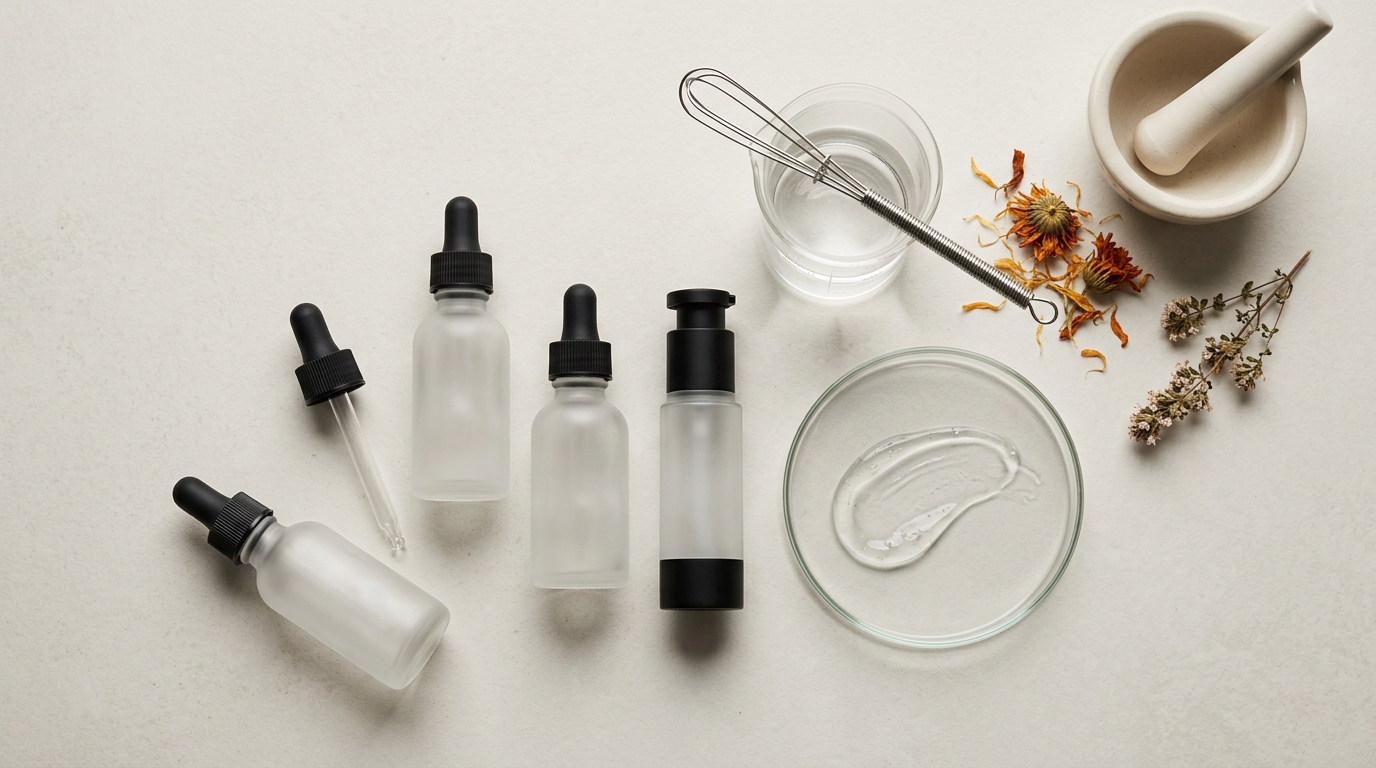
Cosmetics sourcing is half formulation, half packaging. The wrong bottle ruins a great serum — viscosity-pump mismatch, fragrance-loading issues, pH drift in cheap PET. We match formula to facility to bottle vendor so the SKU survives the freight to your fulfillment partner without separating, leaking, or going off-spec. Cosmetics regulatory just changed: MoCRA passed in late 2022 with adverse-event reporting and facility registration kicking in across 2024-2025. Most legacy private-label brokers have not updated their playbook — verify your facility's MoCRA registration directly.
You have an audience and a category thesis — clean beauty, science-backed, men's, retinoid alternative. Stock-formula PL gets you on shelf in 8 weeks.
You have audience trust. You need a clean label, fast turnaround, and a manufacturer who can ship multiple SKUs without a six-month roadmap per SKU.
You sell in-office. Higher-margin SKUs, smaller runs, channel-protected. Practitioner-grade formulas with simpler retail compliance.
You have a hero SKU. You want to layer in a body care line or hair line. You need a sourcing partner that scales without re-pitching every PO.
| Category | Formats | First MOQ | Reorder MOQ | Lead | Indicative cost |
|---|---|---|---|---|---|
| Serums | 30ml dropper bottle or airless pump. Hyaluronic acid, vitamin C, peptide blends. | 500u | 1,500u | 7-9wk | $2.40-$4.80/u indicative at 500u. Pump and bottle spec is 25-40% of cost. |
| Balms & sticks | Lip balm, body balm, multi-purpose stick. Tube, tin, twist-up. | 1,000u | 2,500u | 8-10wk | $1.40-$3.20/u indicative at 1,000u. |
| Mists & toners | Spray-bottle pack-out. Watch fragrance loading and pH stability. | 500u | 1,500u | 7-9wk | $1.80-$3.40/u indicative at 500u. Spray-pump tolerance matters. |
| Body care | Lotions, creams, body oils. Pump bottles dominate. | 1,000u | 2,500u | 9-11wk | $2.20-$4.60/u indicative at 1,000u. |
| Cleansers & masks | Tube, jar, pump. Foam, gel, clay, cream. | 1,000u | 2,500u | 8-10wk | $1.60-$3.80/u indicative at 1,000u. |
/ Indicative pricing only. Final unit cost depends on fill weight, container, label, certifications, and run size. Quote against your specific brief.
Format, claim ambition, target retail, packaging asks. We verify facility candidates against FDA MoCRA registration and ISO 22716 status.
Three stock-formula candidates with sample shipment. We confirm viscosity, scent, color, and shelf-life data.
Bottle/pump spec confirmed against the formula's viscosity and fragrance loading. Label dieline produced. Ingredient panel formatted to FDA cosmetic spec.
PO direct. Lot test, fill, label, case-pack. Stability data on file.
Goods land. Inbound complete. Launch live.
// Total7-9 weeks for stock-formula private label. 12-16 weeks for contract manufacturing of a custom formulation.
Cosmetic economics live in two places: the formula and the packaging. Operators tend to over-invest in formula and under-invest in packaging — the cheap pump-bottle that leaks at 80°F is the cost line that kills launches.
Every line below has cost a real operator real money. Here is the tell, and the fix.
// Tell
Facility says they are registered. FDA registration list does not show them. Or they are registered but the specific SKU isn't listed.
// Fix
Verify directly via FDA's cosmetics registration database. Confirm SKU listing — facility registration is not enough under MoCRA.
// Tell
Sample looks great. Two months in storage, formula separates, oxidizes, or eats through the dropper bulb.
// Fix
Run a 6-week accelerated stability in the actual production bottle — not the sample bottle. Confirm material compatibility with the formulator before tooling.
// Tell
Marketing copy says 'reduces wrinkles' or 'prevents acne' — drug claims that turn the SKU into an OTC drug under FDA.
// Fix
Stay in cosmetic-claim language: 'visibly diminishes the look of fine lines.' Drug claims trigger FDA OTC registration — a separate, expensive path.
// Tell
Eye-area or lip SKU uses a color not approved for that use. FDA recall risk.
// Fix
Match each color additive to FDA's approved-use list before formula lock. Eye-area has the strictest list.
// Tell
Customer reports irritation. You email them politely and forget. Under MoCRA, serious adverse events have 15-business-day reporting requirements.
// Fix
Build an adverse-event SOP. Maintain records. Report serious events to FDA per MoCRA timeline.
Cosmetics in the US are now governed by MoCRA — the Modernization of Cosmetics Regulation Act of 2022, the biggest cosmetics regulation update in 80+ years. MoCRA mandates facility registration, product listing, adverse-event recordkeeping, and good manufacturing practices for cosmetic products. Verify your facility's MoCRA registration before any PO.
Mandatory facility registration, product listing, adverse-event reporting. The current cosmetic regulatory framework.
View source →Required label content: identity, net quantity, ingredient list (INCI names), warnings, manufacturer or distributor.
View source →International cosmetic GMP standard. Required by major EU and US retailers.
View source →Color additives in cosmetics must be FDA-approved for cosmetic use. Includes specific category restrictions (eye, lip, mucous-membrane).
View source →Required warning for SKUs containing listed substances above safe-harbor levels — including some cosmetic ingredients.
View source →Mandatory under the 2022 act. Confirm via FDA's cosmetic registration database.
FDA →International cosmetic GMP standard. Required by major EU and US retailers.
ISO →Cruelty-free verification. Required for the segment of consumers who screen on it.
Leaping Bunny →Environmental Working Group ingredient screening. Brand-side rather than safety-side.
EWG →Verifies absence of animal-derived ingredients. Audit-based.
Vegan Society →We do not certify facilities ourselves. We verify each candidate's certification status against the issuing body's public registry before passing them to you. If a facility cannot be verified, it is not on our list.
/ All citations verified against the issuing body's published page. Last verified: 2026-05-10.
Tell us format, target MOQ, certifications, and channel mix. We come back inside 36 hours with three sourcing routes.
Open quote form → [02] ToolThe one-page brief format any GMP-aware factory will quote against in 48 hours. Free.
Download PDF →Tell us format, target MOQ, certifications you need, and your channel mix. We will come back inside 36 hours with three sourcing routes for cosmetics & skincare.