Functional beverage founders
You have a thesis (adaptogen, electrolyte, prebiotic, sparkling protein) and audience. You need a co-packer with current canning line capacity and shelf-stable formulation experience.
Food and beverage is the unforgiving category. Shelf life is the entire conversation. Co-pack capacity is genuinely tight — the canning lines and bottling lines have a finite number of run hours per week, and they fill up months in advance. We have watched too many operators get a beautiful first run and discover the facility cannot fit them in for reorder until Q4 next year. We source from co-packers with real, current capacity and we get the lead time in writing on the brief, not the website. Regulatory under FSMA (Food Safety Modernization Act) and the FDA's preventive-controls rule is non-trivial. The facility owns most of it — but the brand owns claims and labeling.
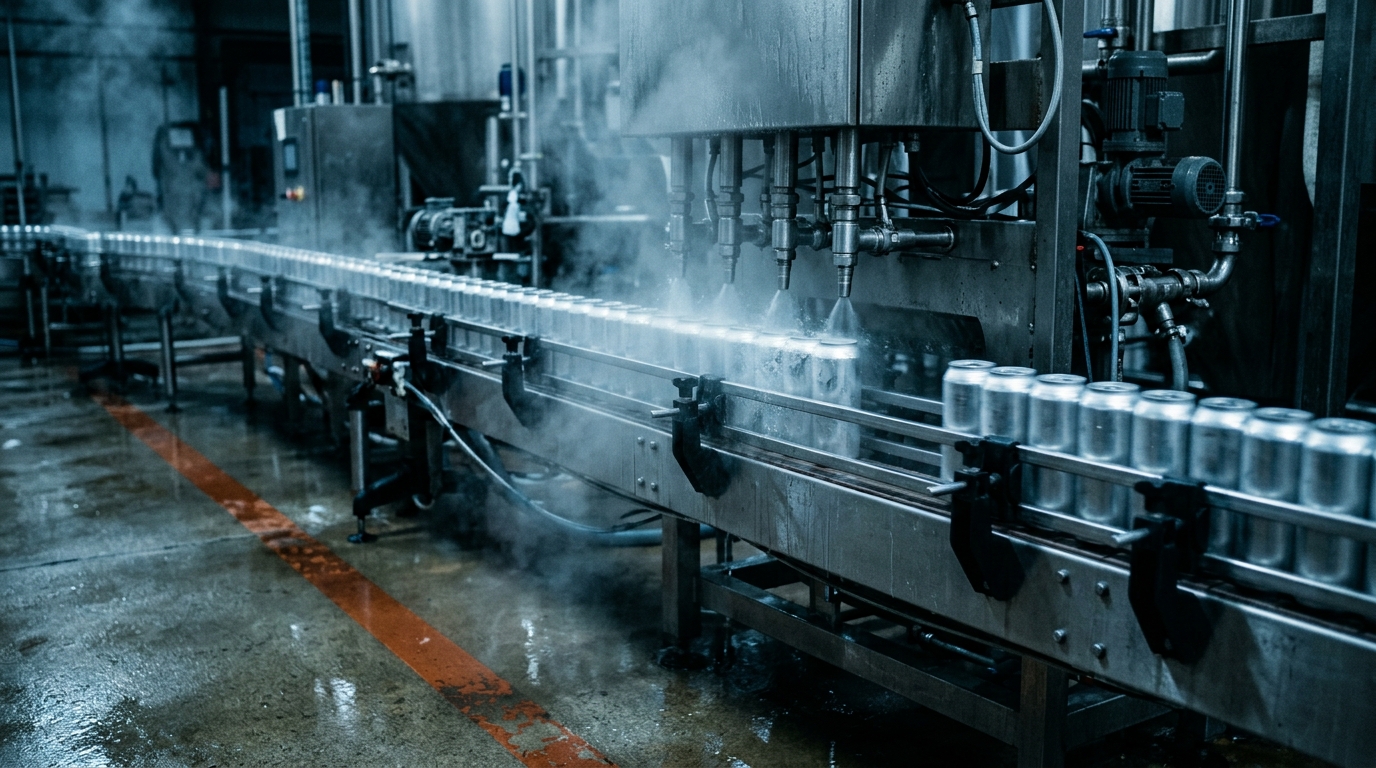
You have a thesis (adaptogen, electrolyte, prebiotic, sparkling protein) and audience. You need a co-packer with current canning line capacity and shelf-stable formulation experience.
Protein bar, snack bar, or performance bar. Wrapper print is the bottleneck. Co-packer match has to include print-vendor coordination.
Glass bottle, induction-seal cap. Acidified shelf-stable. Easier path than RTD beverage. MOQ around 1,000 units.
Whole bean, ground, or single-serve. Origin sourcing is its own brokerage. Roasting partner often separate from packaging partner.
| Category | Formats | First MOQ | Reorder MOQ | Lead | Indicative cost |
|---|---|---|---|---|---|
| Cold brew & RTD | Aluminum can or PET bottle. Pasteurization spec drives shelf life. | 1,500u | 5,000u | 10-12wk | $1.20-$2.80/u indicative at 1,500u. Canning line capacity is the bottleneck. |
| Functional bars | Protein bar, snack bar, performance bar. | 2,000u | 5,000u | 10-14wk | $0.85-$2.40/u indicative at 2,000u. Wrapper print is its own bottleneck. |
| Hot sauces & condiments | Glass bottle with induction-seal cap. Shelf-stable acidity. | 1,000u | 2,500u | 8-10wk | $1.40-$3.20/u indicative at 1,000u. |
| Coffee & tea | Whole bean, ground, single-serve. | 500u | 1,500u | 6-8wk | $2.40-$5.80/u indicative at 500u. Origin and roast spec drive cost. |
| Powders (functional drink mix) | Stick-pack or tub. Hydration, greens, electrolyte, instant coffee. | 1,000u | 2,500u | 8-10wk | $1.80-$4.40/u indicative at 1,000u. |
/ Indicative pricing only. Final unit cost depends on fill weight, container, label, certifications, and run size. Quote against your specific brief.
Format, claim ambition, target retail, channel, certifications. We confirm current line capacity at three candidate co-packers — capacity is the long pole.
Three shortlisted with sample request. Pasteurization or acidification spec confirmed.
Formula confirmed. Container and closure spec locked. Label or wrapper print initiated.
PO direct. Pilot run if requested. Full production. Lot test, fill, label, case-pack, palletize.
Goods land at 3PL. Inbound complete. Launch inventory live.
// Total10-14 weeks for shelf-stable RTD with custom labels. 6-8 weeks for coffee, tea, condiments. Aseptic and refrigerated formats sit at the long end of every range.
F&B economics are dominated by container, line, and pasteurization choice. Operators tend to fixate on the formula and miss the bottling-line economics that move the math by 30-50 percent.
Every line below has cost a real operator real money. Here is the tell, and the fix.
// Tell
Co-packer commits a window. Bigger client fills the line. Your PO slides 8-12 weeks.
// Fix
Get capacity commitment in writing. Pay a small capacity-hold fee if necessary. Diversify with a backup co-packer.
// Tell
Formula failed shelf-life testing because pasteurization spec was wrong. Lots pulled at retailer.
// Fix
Confirm pasteurization parameters (temperature, time, pH) match formula and target shelf life. Real-time stability before retail commitment.
// Tell
Formula contains tree nut. Label allergen statement missing or incorrect. Recall risk.
// Fix
Allergen statement validation by regulatory consultant. Cross-contact controls in facility. Allergen panel on COA.
// Tell
Hot sauce co-packer doesn't have a Better Process Control trained operator. FDA inspection finds it.
// Fix
Verify BPCS training and acidified-foods scheduled-process filing before PO. Required by 21 CFR 114.
// Tell
Production cans are sitting unlabeled because wrapper print is 4 weeks behind. Cans risk going out of spec.
// Fix
Order wrapper print before liquid run, not after. Coordinate the print vendor and the co-packer in the brief.
Food and beverage in the US are governed by FSMA (Food Safety Modernization Act of 2011) and the FDA preventive-controls rule. Co-packers must register with FDA as food facilities, hold a current Food Safety Plan, and maintain HACCP (Hazard Analysis Critical Control Points) discipline. SQF and BRC are the third-party audit standards major retailers require.
FDA preventive controls for human food. Mandatory facility registration, food safety plan, HACCP.
View source →Required content: identity, net quantity, nutrition facts panel, ingredient list, manufacturer info, allergen statement.
View source →USDA FSIS jurisdiction over meat, poultry, and egg products. Different facility registration.
View source →Global Food Safety Initiative-recognized audit standards. Required by major US food retailers.
View source →Required for shelf-stable acidified foods (hot sauce, salsa, dressings). Mandatory Better Process Control School training.
View source →Required for any US food facility. Confirm via FDA's facility registration list.
FDA →GFSI-recognized food-safety audit standard. Required by major US retailers (Whole Foods, Sprouts, Costco).
SQFI →Global Food Safety Initiative-recognized audit standard. Common alternative to SQF.
BRCGS →Required for organic claim on label. Both facility and inputs certified.
USDA →Faith-based certification. Audit-based. Required for some retailers and channels.
Various →Gluten-Free Certification Organization. Third-party verification of gluten-free claim.
GFCO →We do not certify facilities ourselves. We verify each candidate's certification status against the issuing body's public registry before passing them to you. If a facility cannot be verified, it is not on our list.
/ All citations verified against the issuing body's published page. Last verified: 2026-05-10.
Tell us format, target MOQ, certifications, and channel mix. We come back inside 36 hours with three sourcing routes.
Open quote form → [02] ToolThe one-page brief format any GMP-aware factory will quote against in 48 hours. Free.
Download PDF →Tell us format, target MOQ, certifications you need, and your channel mix. We will come back inside 36 hours with three sourcing routes for food & beverage.