Skip to content
PL Private Label Supply Mfg. · Fulfillment · Brand Ops
[B-03] // Buyer path · B-03

Private label supplement manufacturer for a startup.

You have a positioning angle that is not 'just another greens powder.' You have a target audience that reads ingredient panels. You need a cGMP factory that will run 1,000 units of a custom blend, hand you a COA you can publish, and not require a $50k retainer to get on the calendar. Here is the path.

Primary KW: private label supplement manufacturer for startup Updated 2026-05-10 Intent: Commercial
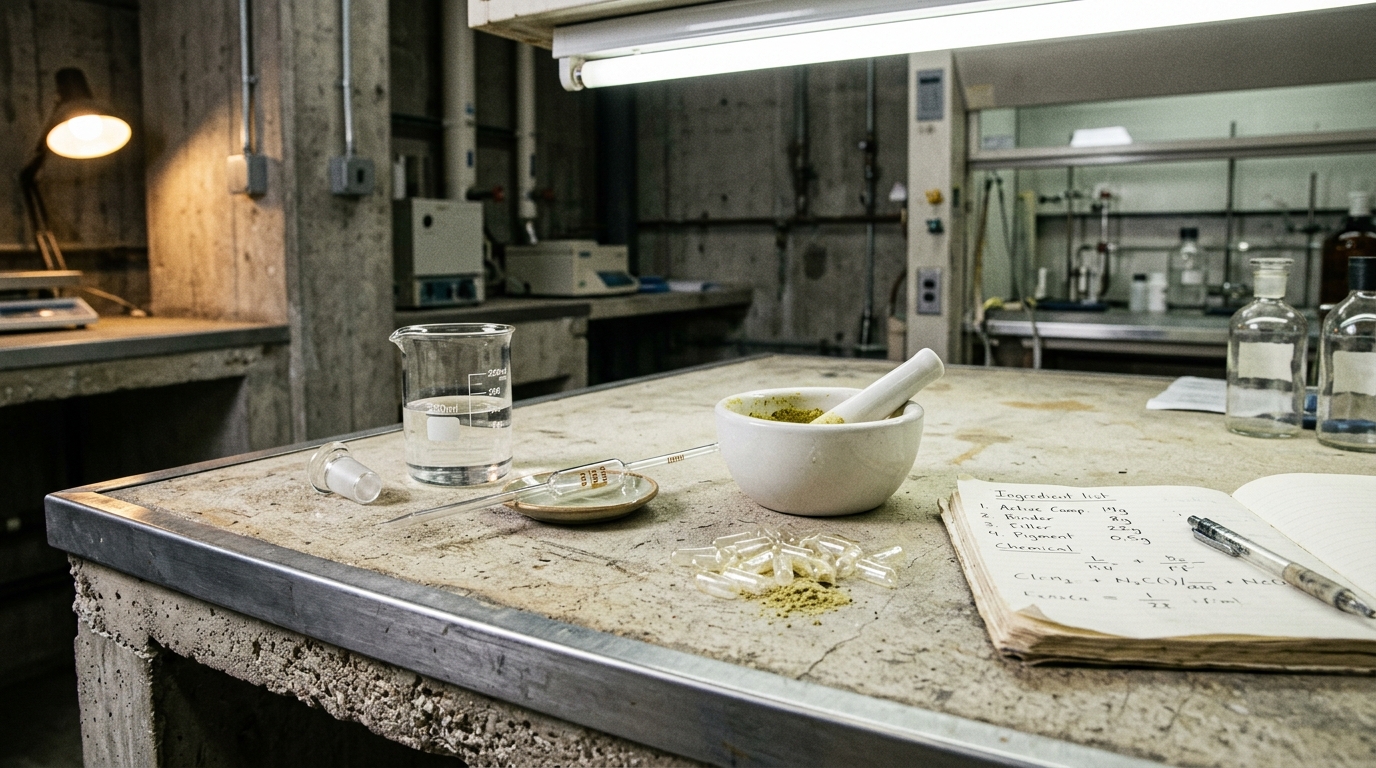
Industrial lab bench with a glass beaker of clear liquid, glass pipette on ceramic dish, white porcelain mortar and pestle with green-yellow powder, scatter of clear capsule shells, open notebook with handwritten ingredient list.
[B-03] Buyer Path
[01] // Where you are

Where most DTC supplement startups are when they brief us.

01

// Honest read

You are not a first-time founder. You have run a brand. Maybe you sold one. The supplement category caught your eye because the unit economics work — DTC LTV at 12 months can hit 4-6x acquisition cost if the SKU performs. You have a thesis: 'sleep stack without melatonin,' 'creatine that does not bloat,' 'gut-brain stack for women in perimenopause.' You have read every Examine.com page on the actives. You have a brand name and a domain. What you do not have is a factory.

You looked at the public lists — Makers Nutrition, NutraScience Labs, Bactolac, Robinson Pharma, Vitaquest. Most of them have a 5,000-unit minimum and a 16-week lead time on a custom blend. The ones that quote 1,000-unit minimums are usually private-label only — you take their stock SKU and put your label on it. Which is fine for category #2 SKU but kills your positioning for the hero product.

The third layer is the formulator question. Most contract manufacturers have in-house formulators. Some lock you to their formulator. Some let you bring your own — independent supplement formulators run $5,000-$15,000 per formula and they are worth it because they will write a formula that is manufacturable at scale, not a formula that works at the bench and falls apart at the blender.

[02] // The path

The four-step path from brief to landed inventory.

Supplements are not harder than beauty — they are just gated harder on the manufacturing side because of cGMP. Four steps.

  1. STEP 01 Weeks 1-3

    Lock the formula. Run the DSHEA and claims screen.

    Write the formula in active + dose format, with the rationale and source citation for each active. The factory will quote against this. Run the DSHEA screen on every claim that will appear on the label, the website, and the ad creative — structure-function claims are allowed with the FDA disclaimer; disease claims are not. Confirm none of your actives are on the FDA's prohibited list (ephedra, kava in some forms, certain peptide blends, certain SARMs-adjacent compounds). The screen narrows your shortlist and saves you a label reprint.

  2. STEP 02 Weeks 3-5

    Shortlist three FDA-registered cGMP facilities. Verify on the FDA registry.

    Three contract manufacturers. All three should be FDA-registered Food Facilities (free public registry at FDA.gov) and operating to 21 CFR 111 cGMP. NSF and NPA certification are bonuses — NSF specifically issues a public list of certified dietary supplement manufacturers. Quote all three against the same one-page brief. Get exclusivity in writing on the formula. Get batch-level COA scoped in. Get third-party assay verification scoped in for the first three batches.

  3. STEP 03 Weeks 5-9

    Sample run. Third-party verify the COA.

    Order a paid sample run — typically 100-500 units. The factory will hand you a COA from their in-house or contracted lab. Send a sample to an independent third-party lab (Eurofins, Alkemist, Covance) and run the same assay. The two COAs should match within 5%. If they do not match, that is your tell — either the factory's lab is sloppy, or the spec was not actually produced. Decide before you sign the production PO.

  4. STEP 04 Weeks 9-16

    Production run, batch COA, lot traceability, FBA / 3PL split.

    Sign the production PO. Confirm batch-level COA, lot code on every bottle and case, expiry date on every bottle, sealed and tamper-evident closure, and a serving-size accurate scoop or capsule. Most US facilities will apply FNSKU labels and FBA prep as part of the run if you sell on Amazon. Ship master cases to Amazon FC, to your 3PL, or both. Hold one master case from each batch for two years for traceability and customer service triage.

[03] // Budget

What to budget. Custom-blend supplement ranges.

These ranges hold for a custom-blend capsule, gummy, powder, or stick-pack SKU at startup scale. Single-active SKUs (a creatine, a magnesium) push the lower end. Complex blends (sleep stacks, nootropic stacks, multi-active gummies) push the upper end. Numbers are industry-typical, not a quote.

  • [01] Formula development (independent formulator): $5,000-$15,000 per formula. Skip only if you have direct manufacturing experience.
  • [02] Sample run (100-500 units, full label): $1,000-$4,500. Often credited against production PO.
  • [03] First production run (1,000-3,000 units, custom blend): $8,000-$30,000 total. Unit cost typically $3-$15 at this volume depending on actives.
  • [04] Reorder economics (5,000-10,000 units): unit cost typically drops 35-50%. This is the run where DTC unit economics start working.
  • [05] Batch testing per production run: $300-$1,500 depending on assay count. Required by 21 CFR 111.
  • [06] Third-party assay verification (Eurofins or equivalent): $200-$800 per assay. Optional but strongly recommended for the first three batches.
  • [07] Label print tooling: $400-$1,500 one-time.
  • [08] Bottle tooling: skip on the first run. Use stock 60ct, 90ct, 120ct bottles to keep tooling out of your first PO.
  • [09] Stability testing: $1,500-$4,000 per formula. Required for any expiry date you put on the label.
  • [10] Working capital for the first reorder: 1.5x first-PO total.

The single biggest first-PO surprise is batch testing. 21 CFR 111 requires it. If the quote does not include it, the factory is either non-compliant or the quote is incomplete. Ask which line is missing.

[04] // Stuck points

Where DTC supplement startups actually get stuck.

Run each line against the production PO before you sign.

STUCK 01

// Tell

The factory will run 1,000 units of your custom stack at $2.10 per unit including label and bottle.

// Fix

$2.10 per unit on a 1,000-unit custom-blend capsule run is mathematically incompatible with 21 CFR 111 batch testing, COA delivery, and a US-registered cGMP facility. Either the formula is not actually custom (it is private-label off a stock SKU), or the COA is not real. Send a sample to Eurofins. Verify.

STUCK 02

// Tell

Reviews start landing in month three complaining the capsules taste like fish even though there is no fish in the formula.

// Fix

Cross-contamination at a non-allergen-segregated facility. Check the facility's allergen control program before you sign. Ask which actives were run in the line the week before yours. If they cannot tell you, that is the answer.

STUCK 03

// Tell

The third-party assay came back at 64% of label claim on the hero active.

// Fix

This is why you third-party verify. Reject the batch. Most cGMP agreements have a label-claim tolerance clause — typically ±10%. Anything outside that, the factory eats the cost of the rerun. If the agreement does not have that clause, that is on the contract not the chemistry. Add it before signing.

STUCK 04

// Tell

Wholesale retailer asked for a copy of the cGMP certificate and a Customer Manufacturing Agreement signed by an officer of the facility.

// Fix

Both of these should already be on file. The cGMP attestation is part of the Manufacturer Quality Agreement (MQA) the factory should issue when you sign. If the factory will not sign an MQA, walk.

STUCK 05

// Tell

The Amazon listing got flagged for a structure-function claim and the entire ASIN got suppressed.

// Fix

Pre-clear claims through the DSHEA structure-function lens before printing labels or building the listing. The FDA disclaimer must appear with every structure-function claim. A supplement-specialist paralegal will redline a claim sheet for $300-$800. Cheaper than a suppressed ASIN.

[05] // Where we fit

Where Private Label Supply fits.

We are a sourcing brokerage, not a manufacturer. We translate your formula into a one-page manufacturer brief, verify each shortlisted facility against the FDA Food Facility Registration and the NSF or NPA registries, scope batch testing and third-party assay into every quote, and review the production agreement before you sign. Flat sourcing fee per SKU. You pay the factory directly. You own the formula. We stay on the call during sample and production.

[06] // Related guides

What to read next, in order.

Every link below was selected because it appears in the spec flow for this buyer path. Services, industries, journal posts, and glossary entries — same content base, indexed for your stage.

[07] // FAQ

Common questions on this path.

What is the smallest first-run MOQ for a custom-blend supplement at a US cGMP facility?

1,000-3,000 units is the working window for true custom blends. Some facilities pilot at 500 with a 30-50% per-unit premium. Below 500, you are almost certainly being quoted on a stock private-label formula with a relabel.

Do I need NSF or NPA certification?

Not the brand — the facility. The brand benefits from sourcing at an NSF-certified facility because retailers and Amazon often ask for the certification during category audits. NSF runs an FDA-recognized public registry of certified dietary supplement manufacturers.

Can I publish my COA on the product page?

Yes, and you should. DTC supplement brands that publish per-batch COAs see meaningfully higher conversion and lower return rates. The factory issues the COA; you scrub PII and lot code position before publishing.

How do I keep the factory from selling my custom blend to a competitor?

Exclusivity clause in the Manufacturer Quality Agreement. The clause should bar the factory from producing, selling, or licensing your blend or close derivatives to any other party for the agreement term, typically 2-5 years.

What is third-party assay verification and why does it matter?

The factory tests every batch (21 CFR 111). Third-party assay sends a sample of the same batch to an independent ISO 17025 lab — Eurofins, Alkemist, Covance — to confirm the factory's COA. Match within ±5% on the hero active. Material variances mean the spec was not produced as written.

Should I use the factory's in-house formulator or bring my own?

If the factory's formulator has 10+ years in your category and the formula is straightforward (B-complex, single-active), use theirs. If you have a thesis and want exclusivity, bring an independent formulator. Independent formulators run $5,000-$15,000 per formula and the formula is yours.

How long from brief to first inventory at my 3PL?

12-18 weeks. Three weeks for spec and DSHEA screen, two weeks for shortlist and quote, four weeks for sample and third-party verify, six to eight weeks for production and freight.
[REF] // References

Authority sources for this path.

/ All citations verified against the issuing body's published page. Last verified: 2026-05-10.

// Next step

Brief the supplement SKU.

Tell us format, actives, target MOQ, certifications you need, channel mix (Amazon, DTC, retail), and your timeline. We will come back inside 36 hours with three cGMP sourcing routes.