Skip to content
PL Private Label Supply Mfg. · Fulfillment · Brand Ops
[B-01] // Buyer path · B-01

Private label manufacturer for Amazon sellers.

You have an ASIN strategy. You have a hero image. What you do not have is a factory that takes a 500-unit PO without ghosting you in week four. Here is the path most sellers actually take to get a private-label SKU live on FBA.

Primary KW: private label manufacturer for amazon seller Updated 2026-05-10 Intent: Commercial
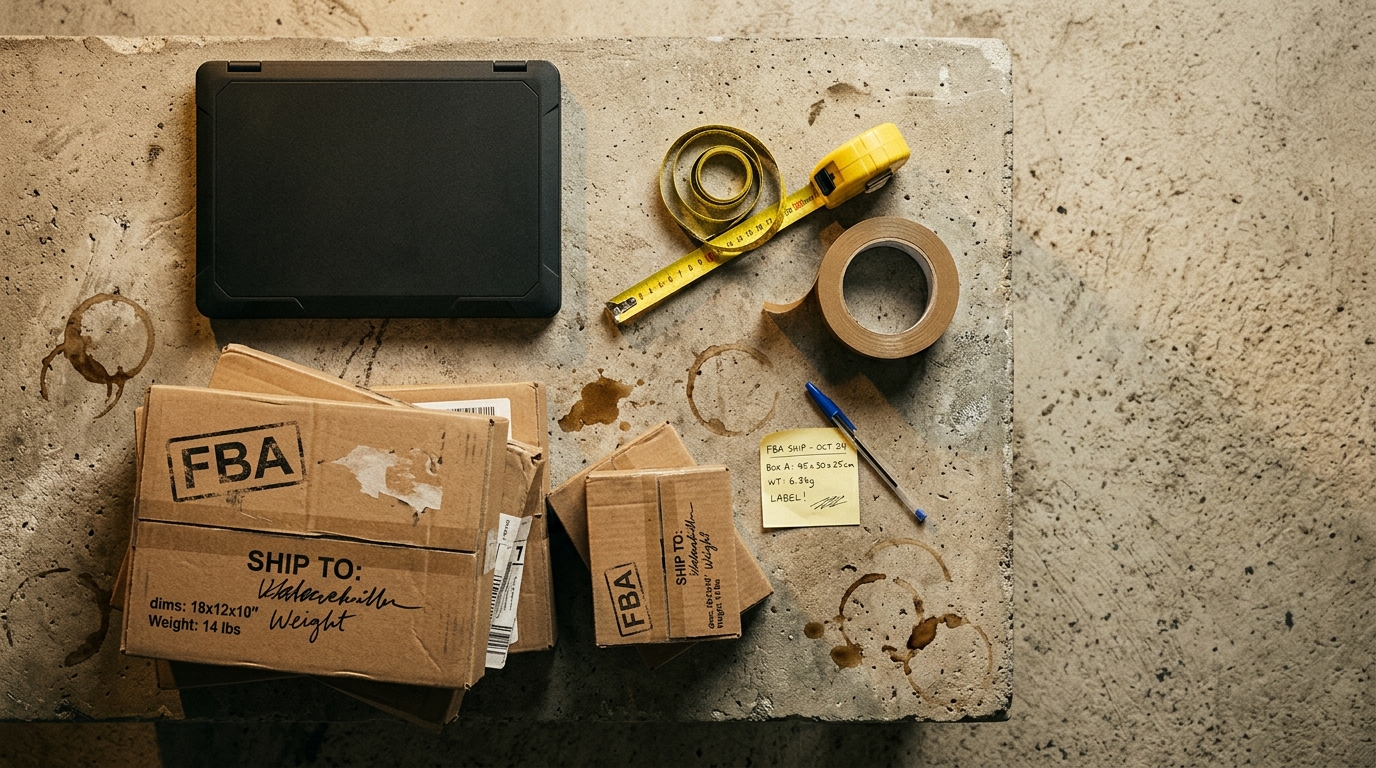
Top-down concrete bench with closed matte black laptop, stack of cardboard FBA-stamped shipping boxes, yellow measuring tape, kraft tape roll, sticky-note with handwritten box dimensions and weight.
[B-01] Buyer Path
[01] // Where you are

Where most Amazon sellers are when they brief us.

01

// Honest read

You have run someone else's product on FBA. You have seen the margin compression up close. Reviews bleed when the supplier ships the same generic SKU to five other sellers. You looked at Alibaba, you looked at Helium 10's supplier directory, you asked in the Reddit threads. What you got back was either a US broker quoting a $25k first run on a generic capsule, or an overseas factory promising 200-unit MOQ and a six-week lead time that is, in reality, a fourteen-week lead time on a third try.

The real problem is not factory access. The real problem is brief. Most Amazon sellers walk into the manufacturer conversation with a product idea and a target landed cost. The factory wants spec: fill weight, capsule size and color, bottle dimensions, label dieline, certification stack, FNSKU position, poly-bag requirement, expiry date format, lot code position. Without that spec, the factory either pads the quote to absorb the risk or politely passes.

The second problem is what category you are actually in. Supplements live under DSHEA and 21 CFR 111. Topical cosmetics moved under MoCRA. Pet supplements live under AAFCO state-level review. Food and beverage trip into the FDA Food Facility Registration and FSMA. Each of those gates the manufacturer list you are allowed to talk to. If you skip the gate, you ship a product that gets pulled from Amazon during a category audit, not eight months from now, three weeks from now.

[02] // The path

The four-step path from idea to FBA inbound.

There are not seven steps. There are four. The other three exist to sell you a course. Run these in order.

  1. STEP 01 Weeks 1-2

    Lock the spec, then the category gate.

    Write the product spec the manufacturer will quote against: format, fill weight or volume, dose per serving, container, closure, label dieline, primary and secondary packaging, certification stack you need (GMP, NSF, USDA Organic, ISO 22716 for skincare). Confirm which regulatory body governs the category — FDA for supplements and topicals, USDA for some food, AAFCO for pet supplements, FTC for claims. The category gate dictates which manufacturers are eligible. Skip this and you waste three weeks talking to factories that cannot ship the SKU you described.

  2. STEP 02 Weeks 2-4

    Shortlist three. Quote against the same spec.

    Three manufacturers, not eight. All three quote against the same one-page brief — same fill, same label, same MOQ window, same certifications. Now the quotes are comparable. You are looking for a 500-1,500 unit first-run window (private-label) or a 1,500-3,000 unit window (light contract manufacturing). You want the factory to break out: per-unit at the MOQ, tooling or plate fees, label print minimum, lead time from PO to ship, batch testing inclusion, COA delivery format, payment terms. Cheapest unit cost is rarely the right answer once you add tooling and freight.

  3. STEP 03 Weeks 4-6

    Pay for the sample. Hold it. Photograph it. Send the COA to legal.

    Never run production from a verbal yes. Order a paid sample run — usually 25-100 finished units — at full label, full primary packaging, full COA. Hold the bottle. Smell the formula. Read the COA. Send the label to a regulatory reviewer or to a paralegal who can confirm structure-function claim compliance and the FDA disclaimer placement. Photograph the unit for your hero image and your A+ content. If the sample fails on any line, you have lost a sample run, not a $12,000 PO.

  4. STEP 04 Weeks 6-12

    Production run, FNSKU label, FBA-prep at factory, ship to Amazon.

    Once the sample locks, sign the PO for the production run. Ask the factory to apply the FNSKU label as part of the run (most US private-label houses do this for an extra $0.10-$0.25/unit; it is cheaper than paying a third-party prep service). Confirm poly-bag suffocation warning, expiry date on outside of carton, lot code on bottle and case, case count per master, dim weight per case. Ship the master cases direct to the Amazon fulfillment center listed in your Send to Amazon shipment. Done.

[03] // Budget

What to budget. Honest ranges, no quote.

These ranges hold for a typical capsule, gummy, single-SKU serum, or topical cream sold on Amazon. Niche formats (MCT softgels, sublingual strips, multi-phase serums) push the upper bound. Numbers below are industry-typical, not a quote on your SKU. Your actual cost depends on fill weight, container, label, certifications, run size, and freight.

  • [01] Sample run (25-100 units, full label): $500-$2,500. Often credited back against the production PO.
  • [02] First production run (500-1,500 units, private-label): $4,000-$12,000 total. Unit cost typically $2.50-$8.00 at this volume.
  • [03] Reorder economics (3,000-5,000 units): unit cost typically drops 25-40%. This is the run where the SKU starts paying for itself.
  • [04] Label print tooling: $300-$1,200 one-time, depending on number of colors and finish (foil, spot UV).
  • [05] FNSKU labeling at factory: $0.10-$0.25/unit. Cheaper than a prep service. Worth it.
  • [06] Freight to Amazon FC: $0.30-$1.20/unit depending on weight, case count, and zone.
  • [07] Category certifications (if you need them): NSF $3,000-$8,000 facility-level audit cost amortized over your runs; USDA Organic adds 15-25% to ingredient cost.
  • [08] Working capital for the first reorder: budget 1.5x your first-PO total, because Amazon disbursement cycles will lag your second run.

If a quote comes in 40% below the lowest end of these ranges, that is not a deal — that is a missing line item. Ask which line the factory dropped. Common drops: batch testing, COA, label print, FDA disclaimer review, poly-bag, expiry-date printing. All of those are non-optional on FBA.

[04] // Stuck points

Where Amazon sellers actually get stuck.

Every line below has killed a real launch. Run a check against each one before you sign the production PO.

STUCK 01

// Tell

The supplier promised a 200-unit MOQ on a custom-formula supplement and a six-week lead time.

// Fix

A 200-unit MOQ on a custom-formula SKU is mathematically incompatible with a working batch testing protocol under 21 CFR 111. Either the formula is not actually custom (it is private-label off a stock SKU — fine, just call it that), or the COA is fake. Ask for the test certificate from the lab. Verify the lab on the NSF or NPA registry.

STUCK 02

// Tell

The first production run shipped, but units arrived without FNSKU labels and the carton dim weights are wrong.

// Fix

Catch this at the sample run. The sample run is when you confirm FNSKU position, poly-bag, expiry date format, carton dim weight, case count per master. Photograph the sample carton. Reuse the photo as the spec sheet for production. Most factories will quote the carton spec into the PO if you give them a photo to copy.

STUCK 03

// Tell

The COA shows passing values, but you have never sent it to anyone qualified to read it.

// Fix

A COA is a one-page summary with assay values per active. Send it to the contract lab named on the COA and ask them to confirm the batch was tested. Most labs will confirm a real batch for free over email. Fake COAs cannot pass this step.

STUCK 04

// Tell

The label clears legal but you discover the structure-function claim is too aggressive after the first review pulls.

// Fix

Pre-clear claims before printing the label. The FDA structure-function claim guidance is in the eCFR. A paralegal who works with supplement brands will redline a claim sheet for $200-$600 and save you a label reprint at $1,200+.

STUCK 05

// Tell

The factory delivered, but the second order takes nine more weeks because the bottle is on backorder.

// Fix

Bottle and closure availability is the single most common cause of reorder delay. Ask your factory to either pre-stock 1.5x your run size in glass or pet containers, or specify a stock container with verified second-source supply. Stock SKUs ship in two weeks. Custom-mold containers ship in eight.

[05] // Where we fit

Where Private Label Supply fits.

We are a sourcing brokerage. We do not run a factory. We do not take a royalty. We write the one-page spec brief, shortlist three manufacturers that match the brief, and stay on the call during sample and production. We charge a flat sourcing fee per SKU and a small spec retainer. You pay the factory directly. If your brief is wrong, we will tell you on the first call — free. If you do not need us, we will say so.

[06] // Related guides

What to read next, in order.

Every link below was selected because it appears in the spec flow for this buyer path. Services, industries, journal posts, and glossary entries — same content base, indexed for your stage.

[07] // FAQ

Common questions on this path.

What is the smallest MOQ I can realistically get for a private-label SKU on Amazon?

500 units is the working floor for a private-label capsule or gummy in the US. Some stock-formula houses will quote 250 if you take their existing label format. Custom-formula contract manufacturing typically starts at 1,500-3,000 units. Below 500, you are usually buying from a US repackager rather than a manufacturer, and unit cost flips upside down.

Do I need FDA approval to sell a supplement on Amazon?

No. Supplements are not approved by the FDA. The brand owner is responsible for compliance under DSHEA and 21 CFR 111. The manufacturing facility should be FDA-registered as a Food Facility (not the same as approval) and operating to cGMP. Amazon may request the registration number during a category audit; the factory provides it on demand.

Does the manufacturer apply the FNSKU label, or do I need a prep service?

Most US private-label manufacturers will apply FNSKU labels as part of the production run for $0.10-$0.25 per unit. Confirm this on the sample carton before signing the production PO. If they cannot, a third-party prep service in the Amazon FC region (Reno, Phoenix, Indianapolis, Allentown) runs $0.55-$1.20 per unit.

How long from brief to Amazon warehouse for a typical first launch?

10-14 weeks is the working range. Spec lock + shortlist takes two weeks, sample takes two to three, production takes four to six, freight to FC takes one. Add two weeks of slack — bottle backorder is the most common cause.

What kills most first launches?

Picking on unit cost alone. The cheapest quote is the one that left out batch testing, COA, label print minimums, or expiry date printing. The cheapest quote is also the one most likely to ghost on the second order. Shortlist three. Quote all three against the same one-page brief. Pick the second cheapest if their factory is GMP-verifiable.

Can I use the same manufacturer for Amazon and my Shopify DTC store?

Yes, and you should. The factory ships master cases — you decide which case goes to Amazon FC and which goes to your 3PL. FNSKU labeling can be applied to one master case and not the other. Cost per unit is identical.
[REF] // References

Authority sources for this path.

/ All citations verified against the issuing body's published page. Last verified: 2026-05-10.

// Next step

Brief the Amazon SKU.

Tell us category, format, target MOQ, certifications you need, and your FNSKU prep ask. We will come back inside 36 hours with three sourcing routes — MOQ, lead time, indicative cost on each.