Skip to content
PL Private Label Supply Mfg. · Fulfillment · Brand Ops
[B-02] // Buyer path · B-02

Contract manufacturer for indie beauty brands.

You have a brand voice that does not sound like a contract manufacturer wrote it. You have a hero ingredient. You need a factory that will run 500 units of your serum, hold the formula confidential, and ship a COA you can actually read. Here is the path.

Primary KW: contract manufacturer for indie beauty brand Updated 2026-05-10 Intent: Commercial
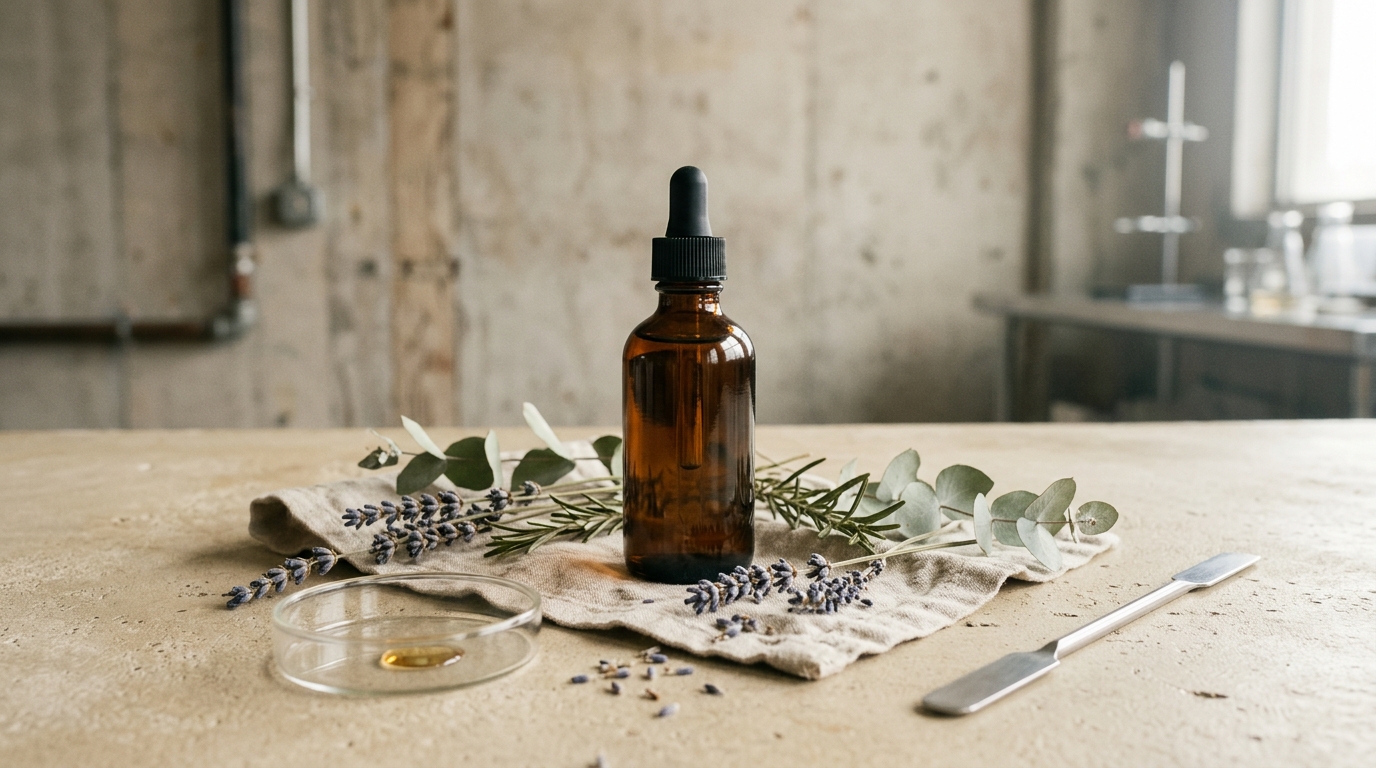
Tall amber glass serum bottle with black dropper on rumpled raw linen, surrounded by dried lavender, rosemary, eucalyptus sprigs, a glass petri dish with a viscous serum drop, brushed steel spatula on bone-cream concrete bench.
[B-02] Buyer Path
[01] // Where you are

Where most indie beauty founders are when they brief us.

01

// Honest read

You have a tested kitchen-counter formula. Friends ask where to buy it. You looked at Maker's Row, you DM'd two factories on Instagram, you joined the IndieBeauty Slack. What you got back was either a $40,000 minimum from a US contract manufacturer that primarily services Sephora-shelf brands, or a Chinese supplier offering 100-unit MOQ on a generic hyaluronic serum dressed up as your formula.

The real problem is that beauty has changed regulatorily. The Modernization of Cosmetics Regulation Act (MoCRA) brought topical cosmetics under formal FDA registration. Every facility making cosmetics for the US market should be MoCRA-registered. Every product needs a Responsible Person on the label. Adverse event reporting is now required. Most factories adjusted in 2025-2026. Some did not. If you sign with a non-MoCRA-aware factory, you ship a product that gets pulled the first time a retailer or marketplace audits its supply chain.

The second problem is ingredient gating. The FDA maintains a list of prohibited or restricted cosmetic ingredients. State-level rules — California's Safer Cosmetics Act, Washington's Safer Products program — overlay that. Your hero ingredient may be fine federally and restricted at the state level. The factory should know this on the first call. If they do not ask which states you plan to ship to, that is the tell.

[02] // The path

The four-step path from kitchen-counter to first shipment.

Beauty looks more complicated than supplements but the operating procedure is identical. Four steps. Run them in order.

  1. STEP 01 Weeks 1-3

    Lock the formula in INCI format, then run the regulatory screen.

    Translate your formula into INCI (International Nomenclature of Cosmetic Ingredients) names with exact percentages. The factory will not quote without this. Run the regulatory screen: MoCRA-applicable, FDA-restricted ingredients, state-level rules (CA Prop 65, WA Safer Products, NY/NJ ingredient bans), retailer disclosure rules (Sephora Clean, Credo Beauty Dirty List, Whole Foods Body Care Standards) if you plan to wholesale. The screen narrows your manufacturer shortlist and surfaces label rework risk before you print.

  2. STEP 02 Weeks 3-5

    Shortlist three ISO 22716-certified facilities. Quote against the same brief.

    Three contract manufacturers, all ISO 22716 (the international GMP standard for cosmetics) verified. All three quote the same one-page brief — same formula, same fill, same primary packaging, same MOQ window, same COA and stability deliverables. You want a 500-1,500 unit first-run window. You want exclusivity terms on the formula in writing — the factory may not resell your formula to another brand for the agreement term. You want batch-level COA and stability testing scoped into the quote, not added later.

  3. STEP 03 Weeks 5-9

    Sample, then stability and PET testing.

    Order a paid sample run — usually 50-200 units. Then commit to stability testing (typically a 12-week accelerated study at 40°C) and Preservative Efficacy Testing (PET, USP 51 method) on the sample. Do not skip these. The 12-week accelerated stability is what sets your real expiry date and tells you whether the formula separates, browns, or grows mold over time. PET tells you whether your preservative system actually works. Without both, you are guessing on shelf life and you are exposed on adverse event reporting.

  4. STEP 04 Weeks 9-16

    Production run, MoCRA label, COA per batch.

    Once stability passes, sign the production PO. Confirm the label includes: full INCI list, Responsible Person (your brand entity name and US address), net contents, batch code, expiry or PAO (Period After Opening) symbol, all required state disclosures. The factory should issue a per-batch COA with assay against your spec. Ship to your 3PL or warehouse. For wholesale retailers, hold one master case from each batch for two years for traceability.

[03] // Budget

What to budget. Indie-realistic ranges.

These ranges hold for a typical serum, balm, cream, or cleanser sold DTC by an indie brand. Active-heavy or fermented formulas push the upper bound. Numbers below are industry-typical, not a quote. Your actual cost depends on hero ingredient, fill volume, primary packaging, certifications, and run size.

  • [01] Sample run (50-200 units, full label): $1,500-$5,000. Often credited against production PO.
  • [02] First production run (500-1,500 units, custom formula): $6,000-$25,000 total. Unit cost typically $4-$22 at this volume for a basic serum or cream — higher for retinol, peptide, or fermented formulas.
  • [03] Reorder economics (3,000-5,000 units): unit cost typically drops 30-45%. This is the run where DTC margin starts working.
  • [04] Stability testing (12-week accelerated, USP/ICH method): $1,500-$4,000 per formula. Required by retailers and material to your real expiry date.
  • [05] Preservative Efficacy Testing (PET, USP 51): $400-$1,200 per formula. Required.
  • [06] Label print tooling: $400-$1,500 one-time, depending on colors, finish, and substrate (paper vs. waterproof vinyl).
  • [07] Primary packaging tooling (custom mold for a unique bottle): $5,000-$25,000+ one-time. Usually skipped for the first run — start with stock components.
  • [08] MoCRA Responsible Person registration with FDA: free, but you need a registered US address. Most virtual offices work.
  • [09] Working capital for the first reorder: budget 1.5x first-PO total, because cosmetic stability tests do not lie about shelf life — your reorder cadence depends on it.

If a quote skips stability or PET testing, it is not cheaper, it is incomplete. Stability is the difference between a product that performs at month nine and a product that browns on the customer's bathroom shelf and pulls one-star reviews.

[04] // Stuck points

Where indie beauty founders actually get stuck.

Every line below has cost a real indie brand its launch. Catch them at sample, not at production.

STUCK 01

// Tell

The factory will run 500 units of your custom formula at $3.20 per unit and ship in four weeks.

// Fix

$3.20 unit cost on a custom-formula serum at 500 units is mathematically incompatible with ISO 22716 GMP and real stability testing. It is private-label off a stock SKU dressed up as custom. Either accept that (and price for it), or move on. Ask for the ISO 22716 certificate. Verify the certificate on the issuing registrar's public registry.

STUCK 02

// Tell

The label cleared internal review but a retailer pulled the SKU at intake because the Responsible Person was missing.

// Fix

MoCRA requires a Responsible Person name and US address on every cosmetic product label. Add it before printing. The Responsible Person is usually your LLC name and registered agent address.

STUCK 03

// Tell

The formula passed sample QA but separated and browned at week six.

// Fix

You skipped stability testing or accepted a 4-week test instead of the 12-week accelerated study. Pay for the full study. A failed stability is cheaper than a viral 1-star review thread on TikTok.

STUCK 04

// Tell

The factory wants to keep a 'reference batch' of your formula for 'internal R&D.'

// Fix

Read the agreement. Reference batches are normal. Resale rights on your formula are not. The agreement should state the factory may not produce or sell your formula for any other party for the term. Without that clause, your hero formula can show up at a competitor next quarter.

STUCK 05

// Tell

Wholesale buyer asked for a Cruelty-Free Leaping Bunny audit and an EU CPNP registration.

// Fix

Plan for these on the first call. Leaping Bunny audits a supply chain, not a product. CPNP registers the product in the EU. Both add 8-12 weeks. Brief them into the spec from day one if EU or retail is part of the plan.

[05] // Where we fit

Where Private Label Supply fits.

We do not run a beauty lab. We do not white-label our own SKUs. We are a sourcing brokerage. We translate your formula into a one-page brief, shortlist three ISO 22716 contract manufacturers that match your hero ingredient and MOQ window, stay on the call during sample and stability, and review the production agreement before you sign. Flat sourcing fee per SKU. You own the formula. You pay the factory directly.

[06] // Related guides

What to read next, in order.

Every link below was selected because it appears in the spec flow for this buyer path. Services, industries, journal posts, and glossary entries — same content base, indexed for your stage.

[07] // FAQ

Common questions on this path.

What does MoCRA actually require of an indie beauty brand?

Three things, primarily: the manufacturing facility must register with FDA, the product label must list a Responsible Person with a US address, and the brand must maintain adverse event records. The MoCRA registration is the factory's responsibility; the Responsible Person and adverse event reporting are yours.

Do I need ISO 22716 certification or just MoCRA?

The brand does not need ISO 22716 — the factory does. ISO 22716 is the international cosmetic GMP standard and is what retailers and wholesale buyers ask the factory to demonstrate. MoCRA is the US regulatory baseline. Both should be in place at the factory before you sign.

Can I skip stability testing on the first run?

Technically yes, legally yes, practically no. Without stability you cannot set a defensible expiry date, cannot answer retailer due diligence questions, and cannot answer customer complaints about a separated or browning product six months in. Pay for the 12-week accelerated study. It is the cheapest insurance on the whole launch.

What MOQ should I expect for a true custom-formula serum at an ISO 22716 facility in the US?

500-1,500 units is the working first-run window. Some facilities pilot smaller (200-300 units) at a 35-50% per-unit premium. Below 200 units, you are almost certainly being quoted on a stock private-label formula re-packaged as custom.

How much should the formula development work cost separately?

$2,500-$10,000 for an indie brand formula development engagement, depending on whether you bring a tested kitchen formula or start from a brief. Bench-only formulation (no manufacturing scale-up) runs cheaper. Manufacturing-scale formulation (scaled, tested, COA-ready) runs higher.

How do I keep the factory from selling my formula to a competitor?

Get exclusivity in writing on the production agreement. The clause should state the factory may not produce, sell, or license your specific formula or close derivatives to any other party for the agreement term, typically 2-5 years. Without the clause, the factory is technically free to use your spec as the basis for another customer's SKU.

Will Sephora or Credo accept my SKU?

Each retailer has a Clean / Dirty list. Pull both before formulating. Sephora Clean and Credo Dirty List are public. Match your formula against both. If you are aiming for retail, brief the retailer's list to the factory before formula lock.
[REF] // References

Authority sources for this path.

/ All citations verified against the issuing body's published page. Last verified: 2026-05-10.

// Next step

Brief the beauty SKU.

Tell us hero ingredient, format, target MOQ, retail aspirations, and your timeline. We will come back inside 36 hours with three ISO 22716 sourcing routes — MOQ, lead time, indicative cost on each.